
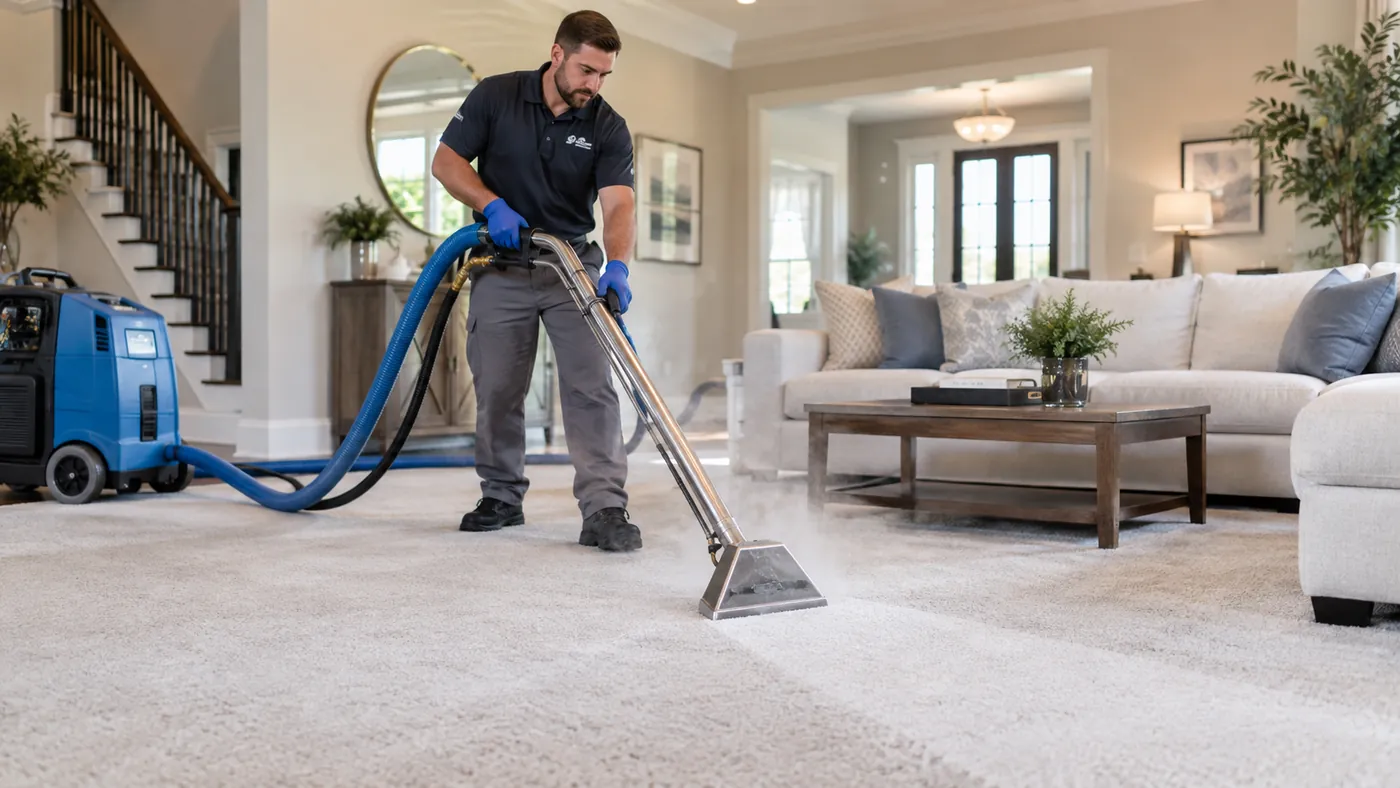
Flooded carpet and underlay are assessed for contamination and condition before extraction, lifting, removal or controlled drying is recommended.
What does flooded carpet & underlay drying include?
We inspect the water category, carpet condition, underlay and subfloor before deciding whether restoration is appropriate. Where safe and practical, extraction removes as much water as possible before controlled drying. If contaminated or non-restorable materials are present, we explain what should be removed and why.
When should you call?
- Carpet is saturated after a clean-water leak
- Underlay feels wet after surface extraction
- Water reached carpet from another room
- Carpet smells damp after a previous incident
How the process works
- 01Identify the water source and category
- 02Inspect carpet, underlay and subfloor
- 03Extract free water
- 04Retain or remove materials based on condition
- 05Dry and monitor the floor system
Why measured restoration matters
Water can travel beyond the visible wet area into underlay, wall cavities, timber, subfloors and adjoining rooms. The restoration plan is based on source, contamination, material type and moisture readings rather than surface appearance alone. That helps reduce unnecessary removal while identifying materials that cannot be safely retained.
Flooded Carpet & Underlay Drying FAQs
Can wet carpet be saved?
Sometimes. Clean-water exposure treated quickly may be restorable, while contaminated or long-saturated carpet and underlay may require removal.
Does the underlay always need replacing?
Not always. The decision depends on water category, material type, saturation and whether it can be effectively dried.
Why does carpet smell after drying?
Odour may indicate retained moisture, residues or contamination in the carpet, underlay or subfloor.
Can you test the floor under carpet?
Yes. Moisture readings can help determine whether the subfloor or surrounding materials remain affected after surface water is removed.