
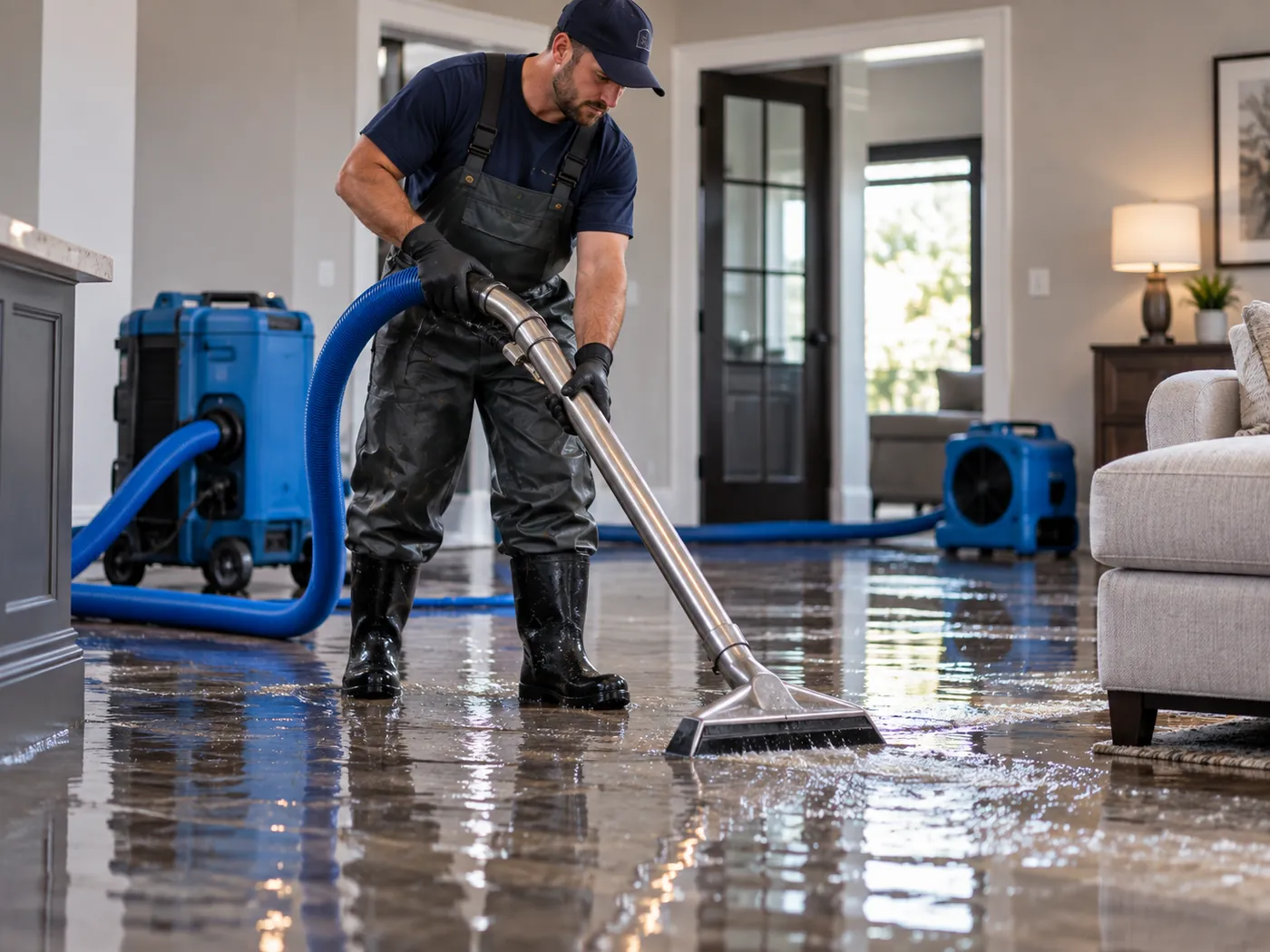
Water extraction removes standing or trapped free water using commercial suction equipment before structural drying begins.
What does water extraction include?
We use high-suction extraction equipment suited to residential and commercial losses. Once visible water is removed, we test surrounding materials for hidden moisture and build a drying plan. Fast extraction is only the first step, so our process continues with air movement, dehumidification and measured progress checks.
When should you call?
- Pooled water on hard floors
- Saturated carpet or underlay
- Water spreading from a burst pipe or appliance
- Floodwater entering ground-floor rooms
How the process works
- 01Stop or isolate the water source
- 02Identify water category and affected materials
- 03Extract accessible free water
- 04Check adjoining areas for hidden moisture
- 05Move into monitored drying
Why measured restoration matters
Water can travel beyond the visible wet area into underlay, wall cavities, timber, subfloors and adjoining rooms. The restoration plan is based on source, contamination, material type and moisture readings rather than surface appearance alone. That helps reduce unnecessary removal while identifying materials that cannot be safely retained.
Water Extraction FAQs
Is water extraction the same as drying?
No. Extraction removes free water. Drying removes moisture retained inside carpet, timber, plasterboard, concrete and other building materials.
Can carpet be extracted in place?
It depends on contamination, exposure time, carpet condition and the underlay. A site assessment is needed before deciding whether in-place restoration is appropriate.
Why is fast extraction important?
The longer free water remains, the more opportunity it has to migrate into adjacent rooms and porous materials, increasing the drying load.
Can you extract water from commercial properties?
Yes. Equipment selection is matched to the size, access and affected floor area of residential, strata and commercial losses.