
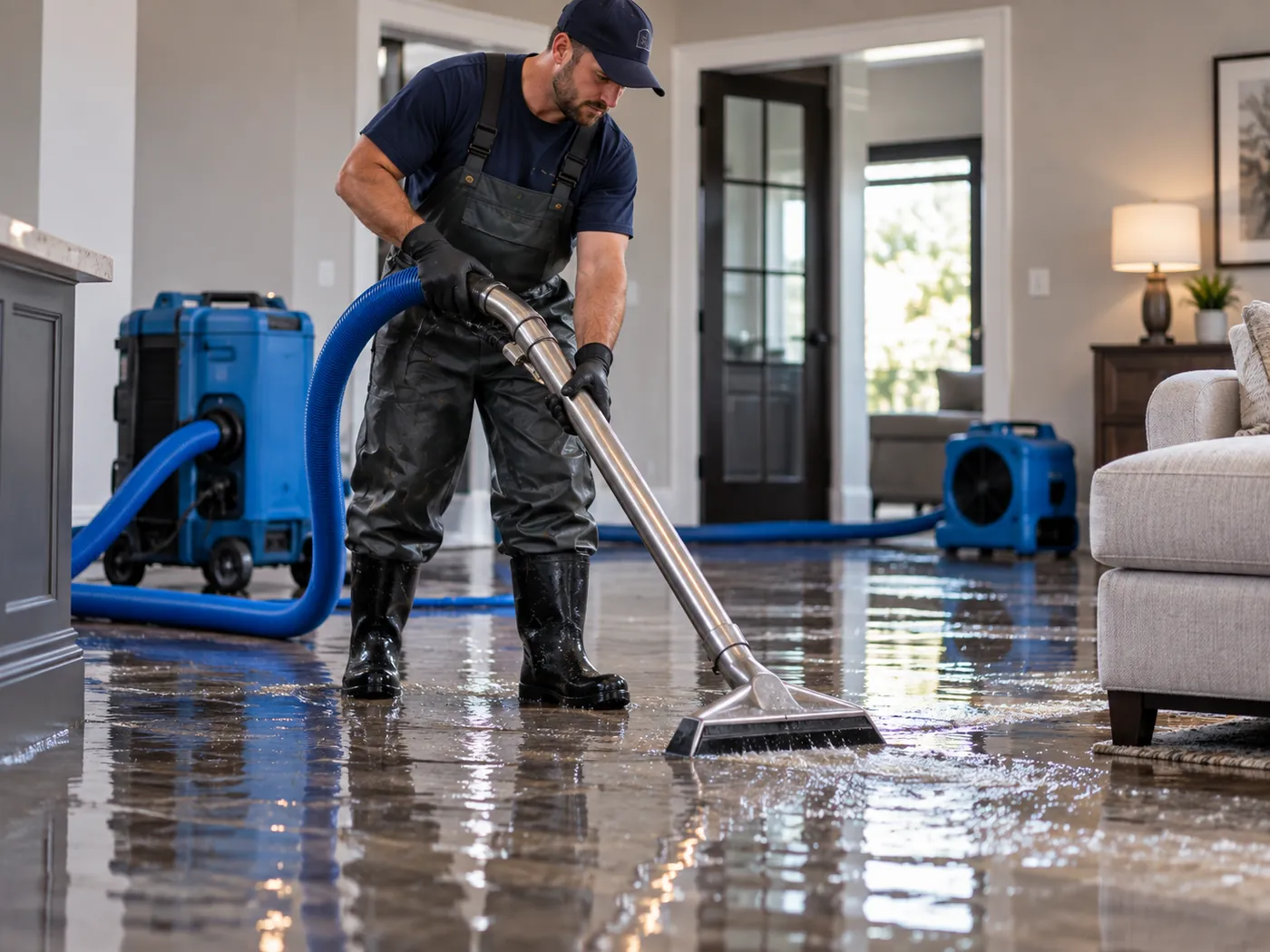
Burst pipe and leak restoration controls the water source, extracts free water, maps hidden moisture and dries affected rooms before secondary damage spreads.
What does burst pipe & leak restoration include?
A burst pipe or failed appliance can wet flooring, wall cavities, cabinetry and neighbouring rooms within minutes. After the source is isolated, we extract free water, test surrounding materials, remove only what is necessary and install drying equipment matched to the moisture load. Thermal imaging and physical moisture readings help identify hidden pathways.
When should you call?
- A pipe has burst
- A flexi hose or appliance line failed
- Water is coming through a ceiling
- A bathroom or kitchen leak spread into adjoining rooms
How the process works
- 01Isolate the source
- 02Extract standing water
- 03Trace the moisture pathway
- 04Open only what is necessary for access
- 05Dry and verify affected materials
Why measured restoration matters
Water can travel beyond the visible wet area into underlay, wall cavities, timber, subfloors and adjoining rooms. The restoration plan is based on source, contamination, material type and moisture readings rather than surface appearance alone. That helps reduce unnecessary removal while identifying materials that cannot be safely retained.
Burst Pipe & Leak Restoration FAQs
What should I do when a pipe bursts?
If it is safe, shut off the water supply and keep clear of electrical hazards. Move dry valuables away from the water and call a plumber and restoration specialist.
Can a small leak cause major damage?
Yes. Slow leaks can remain hidden and wet timber, cabinetry, underlay or wall cavities over time.
Do you repair the pipe?
Plumbing repairs are usually handled by a licensed plumber. Restoration focuses on water removal, moisture assessment, drying and affected materials.
How do you know where the water travelled?
Site observations, thermal imaging and physical moisture readings help map the affected zone beyond the visible wet area.