

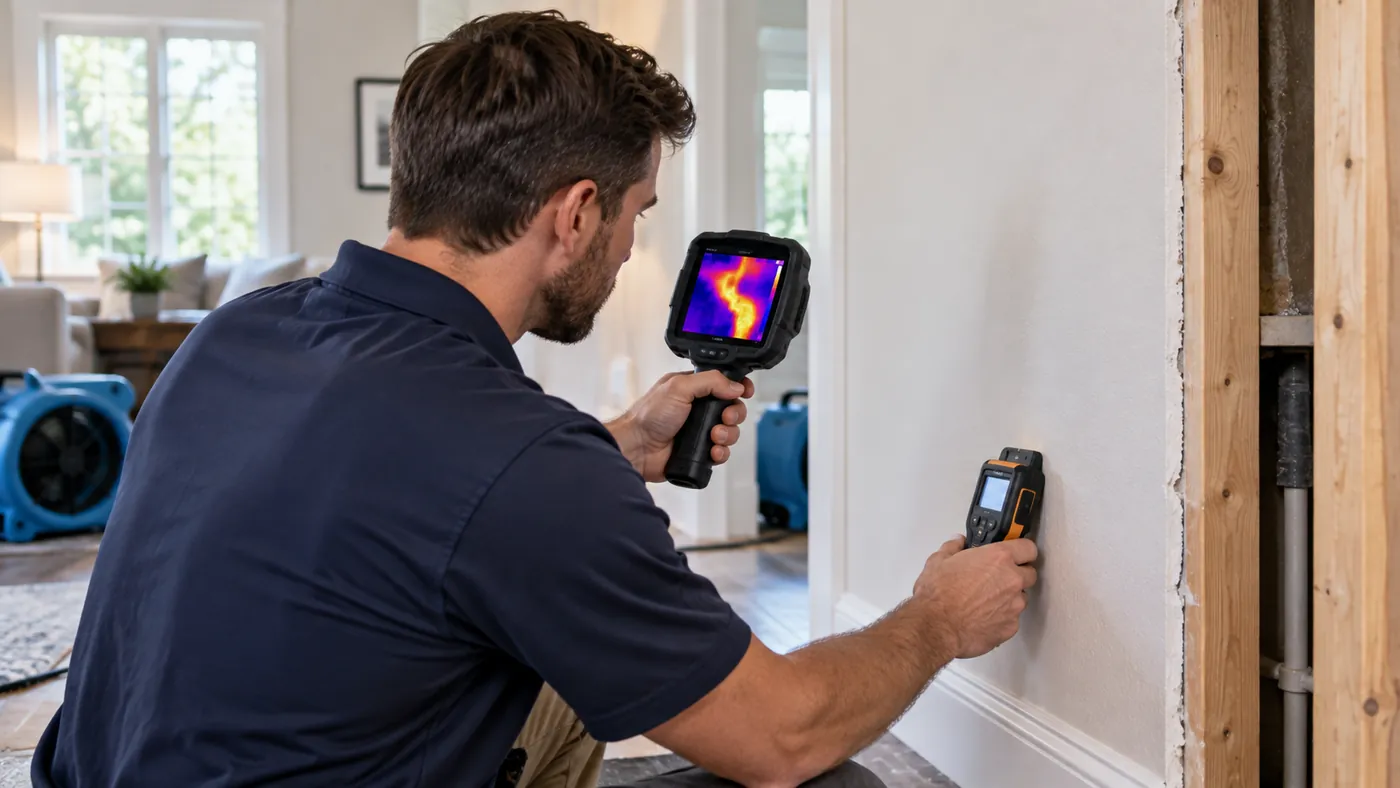
Thermal imaging helps identify temperature patterns associated with hidden moisture, then physical moisture meters are used to confirm whether materials are actually wet.
What does thermal camera & leak detection include?
Thermal imaging is combined with physical moisture readings and site observations. It can help narrow the search around wall cavities, ceilings, flooring and plumbing-related water entry. The result is a more focused restoration plan and better information for plumbers, builders or insurers involved in the repair.
When should you call?
- A leak is suspected but not visible
- Ceiling or wall stains keep returning
- Flooring feels damp or starts swelling
- A musty smell has no obvious source
How the process works
- 01Review the leak history
- 02Scan relevant surfaces for temperature anomalies
- 03Confirm suspect areas with moisture readings
- 04Map the likely moisture pathway
- 05Provide findings for restoration or trade follow-up
Why measured restoration matters
Water can travel beyond the visible wet area into underlay, wall cavities, timber, subfloors and adjoining rooms. The restoration plan is based on source, contamination, material type and moisture readings rather than surface appearance alone. That helps reduce unnecessary removal while identifying materials that cannot be safely retained.
Thermal Camera & Leak Detection FAQs
Can a thermal camera see water through walls?
A thermal camera detects surface temperature differences, not water itself. Those patterns are interpreted alongside moisture meter readings and site observations.
Does thermal imaging replace a plumber?
No. It can help narrow the affected area, but plumbing diagnosis and repairs may still require a licensed plumber.
Can thermal imaging find roof leaks?
It can help identify damp patterns associated with roof ingress, especially when combined with moisture readings and inspection of likely entry points.
Why test adjoining rooms?
Water can travel under flooring, through cavities or along framing beyond the place where the leak first became visible.